REVIEW · KOCHI
Kochi Heritage walk for cultural immersion
Book on Viator →Operated by 5 Senses Walks · Bookable on Viator
Fort Kochi’s story changes every block. This Kochi Heritage Walk links major cultural influences in a tight route: Chinese, Portuguese, Dutch, British, and Jewish threads, plus the sights you actually want in 3 hours. I especially like how the walk moves from landmark to landmark without feeling rushed, starting with the famous Chinese fishing nets and finishing in the spice market area.
My second favorite part is the flow of time and stops: you get a guide who keeps the details straight at places like Santa Cruz Cathedral Basilica, St Francis Church, and the Dutch Cemetery Road, then you end with the smells and colors of the spice trading world. One consideration: snacks aren’t included, so if you’re the kind of person who needs regular food breaks, plan around that and lean on the included coffee or tea.
In This Review
- Key takeaways
- Why this Kochi Heritage Walk makes sense for first-timers
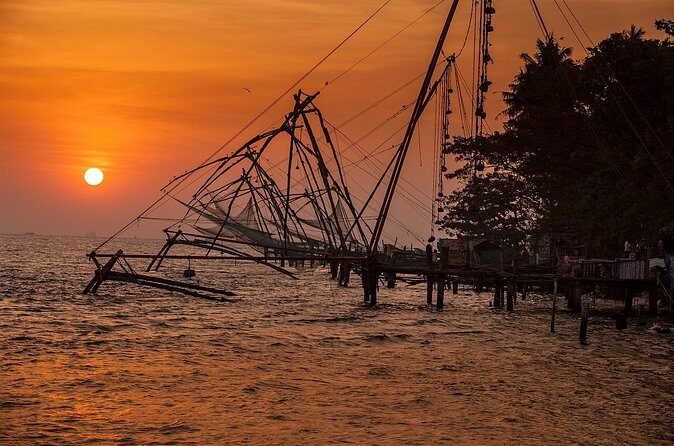
- The Chinese Fishing Nets (Cheena vala) get the story rolling
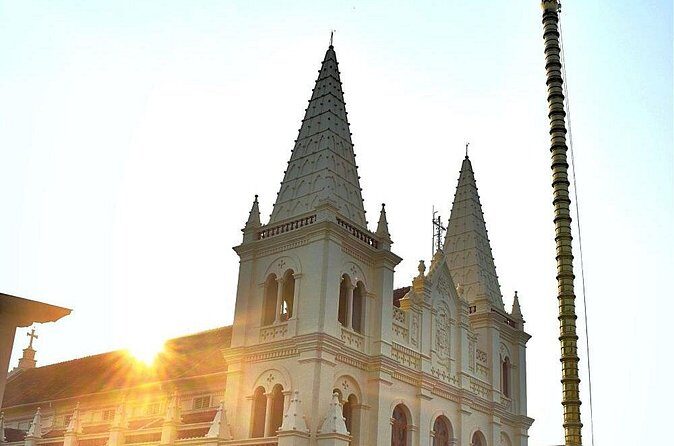
- Santa Cruz Cathedral Basilica: Portuguese arrival and a major turning point
- St Francis Church: wood-and-mud origins and the Portuguese Franciscan link
- Dutch Cemetery Road: 104 tombs that make the past physical
- Fort Kochi Beach: a calmer 30 minutes after the monuments
- Cochin Spice Market finish: where Kochi’s trade story becomes sensory
- Price and value: $55 for a guided cultural route
- How the guides shape the walk: what to listen for
- What it’s best for (and who should skip it)
- FAQ
- How long is the Kochi Heritage walk?
- Where does the tour start?
- Where does the tour end?
- Is the entrance fee included?
- What’s included in the price?
- Are snacks included?
- How large is the group?
- Do I get a mobile ticket?
- Is it near public transportation?
- What is the cancellation policy?
- Should you book this Kochi Heritage Walk?
Key takeaways
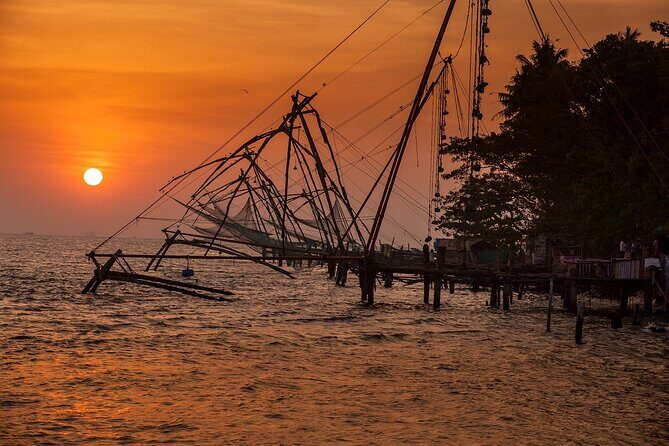
- Cheena vala at the start: the Chinese fishing nets are your instant visual anchor for the whole walk.
- Portuguese-era architecture in two churches: Santa Cruz Cathedral Basilica and St Francis Church show how early Europeans shaped Fort Kochi.
- Dutch Cemetery Road’s tangible details: 1724 founding, 104 epitaphs/tombs, and distinctive materials.
- Fort Kochi Beach as a reset: you get a calm waterfront moment after dense history stops.
- Cochin Spice Market finish: the route ends where Kochi’s spice trade story becomes real.
- Small group pacing: max 15 travelers, so you’re not trapped in a huge crowd.
Why this Kochi Heritage Walk makes sense for first-timers

If Kochi is your first time in Kerala, this is a smart way to get your bearings fast. You’re not just looking at buildings—you’re seeing how trade routes and empires left fingerprints in everyday street life. The route is built for a short attention span and a long memory: you cover multiple neighborhoods in one go, then you end in the spice market zone.
The value here is practical. The tour lists a guide, coffee and/or tea, and entrance fees as included, which means you can budget without playing “what do we pay at the door?” all afternoon. And because the group is capped at 15, the guide can slow down when a question is worth it, especially around the churches and cemetery.
Other heritage and cultural walks we've reviewed in Kochi

The Chinese Fishing Nets (Cheena vala) get the story rolling
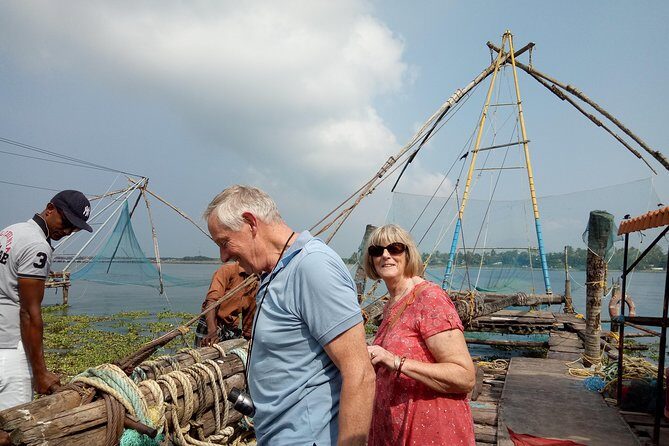
You start at the Chinese fishing nets, locally called Cheena vala. Even if you don’t know the background yet, these nets work as a living symbol: you’re standing in a place where cultural exchange shows up in a working shoreline tradition. That’s the genius of starting here—everything after feels connected instead of random sightseeing.
What you can expect at this first stop is a visual lesson. You’ll look at the nets, understand that they were introduced by Chinese traders, and get the idea that Kochi’s coastal life has been shaped by multiple communities for a long time. Admission is listed as free for this stop, so the tour isn’t built around ticket lines—it’s built around watching and listening.
A small tip for your own experience: take a moment to look not just at the nets but at the rhythm of the waterfront. This is one of those places where the “history” is visible in real time.
Santa Cruz Cathedral Basilica: Portuguese arrival and a major turning point
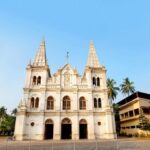
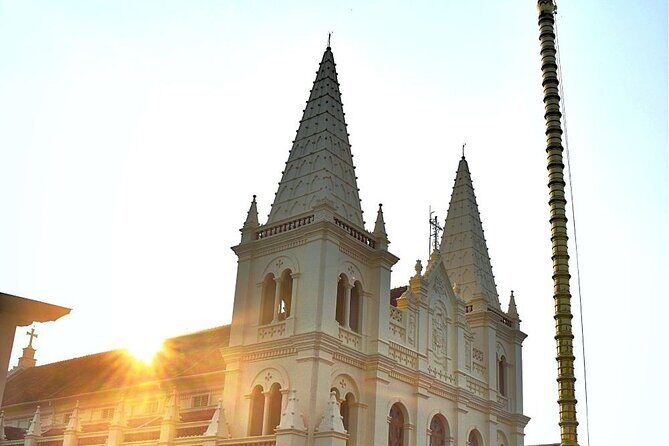
Next comes Santa Cruz Cathedral Basilica, Kochi, tied directly to Portuguese missionary activity. The standout detail is the link to the second Portuguese fleet under Pedro Álvares Cabral, arriving on 24 December 1500. That date matters because it anchors the church’s story to a specific historical moment rather than vague “long ago” claims.
This stop is also about how European influence took on a local shape. You’ll be guided through the meaning of the site in the context of early Portuguese contact, and you’ll get a sense of why Fort Kochi became such an important meeting point for seafarers and traders.
Time-wise, the tour gives you about 30 minutes here. It’s enough to get the background and still keep energy for the next stop—especially if you’re the type who likes to look, then read the details your guide points out.
St Francis Church: wood-and-mud origins and the Portuguese Franciscan link
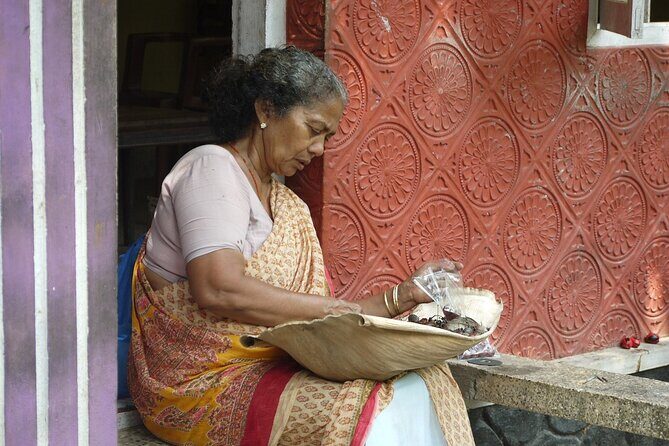
Right after Santa Cruz, you’ll visit Church of Saint Francis, which dates back to 1503. This one traces its origin to Portuguese Franciscan Friars who arrived with Pedro Alvarez Cabral, and the church’s early construction is described as wood and mud. That detail alone changes how you think about the area: it’s not just about stone monuments; it’s about the practical reality of early settlement and building.
Expect the guide to connect the church to the wider Portuguese presence in Fort Kochi. You’ll also likely hear how this area developed into a layered place where different communities lived side by side, each leaving their own mark.
At this stop, you’ll want to pause and notice the contrast between a “humble beginnings” story and the importance people later placed on these churches. That tension is part of what makes the walk feel grounded.
Dutch Cemetery Road: 104 tombs that make the past physical
The route then turns to Dutch Cemetery Road, where the details are wonderfully specific. The Dutch Cemetery was established in 1724, and it has 104 epitaphs and tombs made from granite and red laterite. If you like your history concrete—etched names, materials, dates—this is the stop you’ll remember later.
This isn’t just a background story about “Europeans were here.” The cemetery is described as evidence of Dutch and British nationals who once lived in the area, and each tombstone becomes a small, direct link to a real life.
One possible consideration: this is a reflective stop, and the tour keeps moving after it. If you’re someone who wants a slow, quiet read of every stone, you may feel a bit time-pressed by the 30-minute window. The tradeoff is that you still get the full sweep of Fort Kochi and the spice market finish.
Also, some guide narratives may expand the story beyond the cemetery itself—there’s room for context around how different European communities coexisted in this part of Kochi.
Other walking tours we've reviewed in Kochi





Fort Kochi Beach: a calmer 30 minutes after the monuments
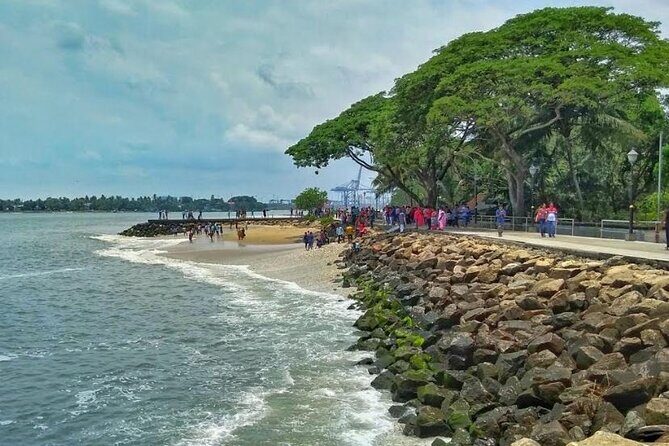
After churches and tombs, you’ll reach Fort Kochi Beach. The description is all about mood: golden sands, tranquil water, and a peaceful break along the Arabian Sea. This stop works as a reset for the whole route.
Why it matters for you: after hours of architecture and dates, a waterfront moment keeps the walk from feeling like one long lecture. You can look around, take in the sea air, and get back your photographer’s eye before you finish at the market.
It’s also a practical pause. The route keeps to 3 hours, and having a calm stop helps you end the walk without feeling drained.
Cochin Spice Market finish: where Kochi’s trade story becomes sensory
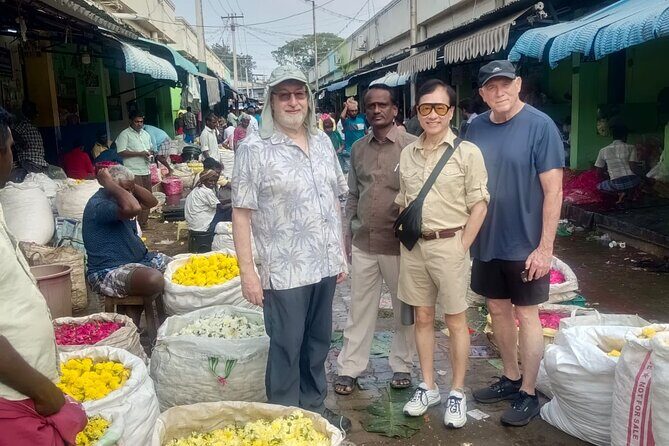
The walk ends at the spice market area—listed as Village spice market near Bazaar Road in Mattancherry. The market stop is called Cochin Spice Market, and it’s tied to Kochi’s role as a spice trading center since ancient times. You’ll hear that traders from Greeks, Romans, Chinese, and Arabs came here—so this isn’t a modern craft fair; it’s a continuation of a long trading identity.
At this point, you’re meant to connect story with senses. The market offers a wide range of spices, and the walking route is designed so you’re not just reading about global trade—you’re standing in the place where spices are sold, displayed, and discussed in real time.
If you’re worried about shopping pressure: you can still enjoy the market even if you buy nothing. Use it as your final “proof of concept” stop: the route’s whole theme has been cultural connections via trade, and spices are where that theme becomes obvious.
Price and value: $55 for a guided cultural route
At $55 per person for about 3 hours, you’re paying for three things: a guide, guided entry/coverage of entrance fees, and the included coffee and/or tea. That bundle can be good value in a city where sorting out who can explain what at each monument can cost you time and frustration.
You also get a structure that helps you travel smarter. The tour includes a mobile ticket, and there’s a maximum group size of 15, which usually means less crowding and more personal attention. Group discounts are mentioned too, so if you have friends to share the walk with, it can improve the per-person deal.
What’s not included is important: snacks aren’t included. The good news is the tour includes coffee or tea, and the pace is short enough that many people can handle the day with a snack planned separately. Just don’t assume the route comes with a full food stop.
How the guides shape the walk: what to listen for
The walk’s success depends a lot on the guide’s storytelling style, and you’ll get hints of what works from the way different guides have run it. In past sessions led by people like Alex or Rajesh, the emphasis has been on making the history stick at each site—stories that connect Portuguese arrivals, Dutch cemetery realities, and the spice market’s trading world.
You may also notice the guide team coordinating short transitions in a practical way. One example from the walk’s experience record includes transport coordination with someone named Shan, and the route description suggests it’s close to public transportation. Translation: you’re not expected to be your own tour navigator the entire time.
My advice: treat the guide like your portable reference book. Ask a simple question early—what’s the main connection between nets, churches, and the cemetery? When the guide answers well, the rest of the walk clicks.
What it’s best for (and who should skip it)
This is a great fit if you want a compact Fort Kochi walking tour that covers multiple cultural layers without needing to plan each stop yourself. It’s also a good choice if you like learning through place-based stories: Chinese fishing nets with Cheena vala context, Portuguese-era church origins, Dutch Cemetery Road materials and founding date, then the spice market finish.
You might want to skip it if you strongly dislike walking for 3 hours, or if you need built-in snack breaks. Because snacks aren’t included, you’ll feel better if you’re okay with coffee/tea as your main included comfort.
If you like markets but prefer to shop slowly, this ending is actually handy. You’ll finish where you can linger—at least more than at the earlier, time-boxed stops.
FAQ
How long is the Kochi Heritage walk?
It lasts about 3 hours.
Where does the tour start?
It starts at the Chinese Fishing Nets (listed as X69R+9V5, Fort Vypin, Puthuvype, Kochi).
Where does the tour end?
The walk ends at the Village spice market at Bazaar Rd, Mattancherry, Kochi 682002, and it’s described as ending at the spice market in Fort Kochi.
Is the entrance fee included?
Yes. Entrance fees are listed as included, and the stops also show admission tickets as free.
What’s included in the price?
Included items are the guide, coffee and/or tea, and the entrance fee.
Are snacks included?
No, snacks are not included.
How large is the group?
The tour has a maximum of 15 travelers.
Do I get a mobile ticket?
Yes, the tour includes a mobile ticket.
Is it near public transportation?
Yes, it’s listed as near public transportation.
What is the cancellation policy?
Free cancellation is available, and you can cancel up to 24 hours in advance for a full refund.
Should you book this Kochi Heritage Walk?
If you want an efficient way to understand Fort Kochi through real landmarks—Chinese nets, Portuguese churches, a Dutch cemetery with clearly stated details, a beach reset, and a spice-market finish—this is an easy yes. The pricing also looks fair for what’s included: guide time plus coffee/tea and entrance fee coverage, in a small-group format.
Book it if you’re planning a Kochi short visit and want a guided route that ties the city’s trade-and-culture story into one walk. Pass if you need snacks provided on the spot or you’d rather spread history stops out over a longer day.