REVIEW · KOCHI
Stories of Jew Town: Guided Heritage Walk in Kochi
Book on GetYourGuide →Operated by Lets Go Far · Bookable on GetYourGuide
Five stops, one story of Kochi. This 2.5-hour guided heritage walk connects St. George Orthodox Koonan Kurish Old Syrian Church, the Spice Market, and Paradesi Synagogue in a route where you can see how religion, trade, and everyday life overlap. I especially like how the walk threads into Jew Town and the Jewish Cemetery, turning “old buildings” into a clear sense of who lived here and why it mattered.
The pace is friendly since it runs as a small group (up to 10), and guides you may meet—Dominic, Sajeev, Satish, or Sajiee—tend to focus on making you comfortable while they explain what you’re seeing. One consideration: you’ll be on your feet for a fair stretch through historic streets and market areas, so plan for sun, dust, and uneven ground.
In This Review
- Key highlights you’ll actually feel
- Where the walk starts: St. George Orthodox Koonan Kurish Church
- The Cochin Spice Market: what spices meant here
- Mattancherry Palace (Dutch Palace): murals that tell you how people lived
- Jew Town lanes: antiques, art, and the feeling of a neighborhood
- The Jewish Cemetery: reading memory from quiet ground
- Paradesi Synagogue: old-world design, Belgian glass, and preserved rituals
- Price and pace: $12 for a smart use of your time
- Comfort tips that make the tour easier
- Who should book this Jew Town heritage walk?
- Should you book this walk?
- FAQ
- How long is the Stories of Jew Town guided heritage walk?
- What does the tour cost?
- Where do I meet for the tour?
- What’s included in the tour?
- What languages are the guides?
- Is the tour a small group?
- What should I bring with me?
- Is the tour wheelchair accessible?
- Can I get a refund if I cancel?
Key highlights you’ll actually feel
- A straight line through Kochi’s religious layers, from Old Syrian Christian traditions to the Paradesi Synagogue
- Spice Market context you can spot with your eyes, not just a lecture about trade
- Mattancherry Palace murals and Kerala-style architecture, including myth and royal life painted into the space
- Jew Town lanes for antiques, art, and small local stops, with chances to meet artists depending on the day
- Paradesi Synagogue’s atmosphere, from Belgian glass chandeliers to ancient ritual objects
Where the walk starts: St. George Orthodox Koonan Kurish Church

I like starting at St. George Orthodox Koonan Kurish Old Syrian Church because it sets the tone fast. Before you get to markets and palaces, you’re grounded in Kochi’s Christian traditions—those older roots that still show up in architecture and community memory.
Look closely at the building style and how the site is used today. Even if you don’t know the details, you’ll come away with a better sense of how long-standing faith communities helped shape the city’s character. This is also a good moment to ask questions, because your guide can anchor later stops in what you’re seeing right now.
Practical note: wear shoes you can rely on. You’ll be walking through older areas where surfaces can be rough or slippery.
Other heritage and cultural walks we've reviewed in Kochi

The Cochin Spice Market: what spices meant here
Next comes the Cochin Spice Market, and this stop is built for your senses. You’ll move through stalls, colors, and the smell of spices while your guide explains why these goods mattered to Kochi’s trade heritage.
I like this part because it connects the dots between geography and economy. Kochi wasn’t only a place on a map; it was a place where spices helped pull merchants, communities, and culture into contact. If you want something to look for, pay attention to how spices are displayed and bundled, and how vendors talk about their products. The market becomes a living lesson in “how trade works” in a port city.
This segment can feel busy and hot, depending on the day. Bring sunglasses and sunscreen, and keep water handy—short refresh breaks help your brain absorb more than you’d expect.
Mattancherry Palace (Dutch Palace): murals that tell you how people lived

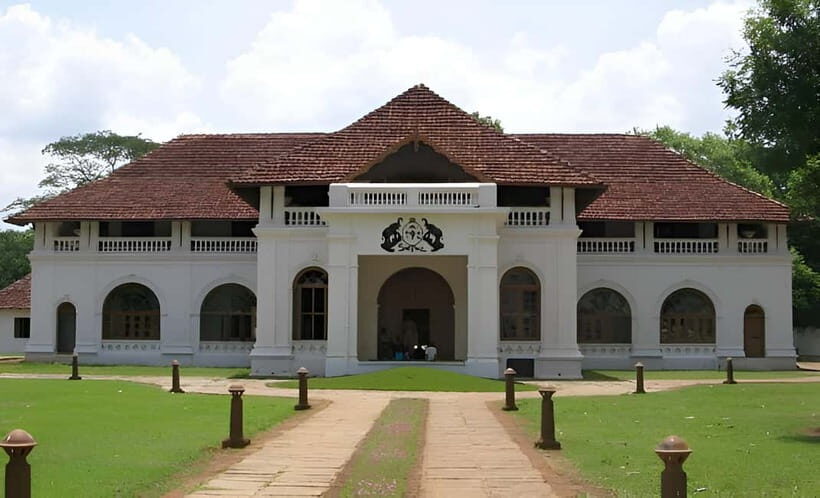
Mattancherry Palace—also known as the Dutch Palace—brings you into a different kind of storytelling. Here the architecture matters, but the murals are the real focus: intricate scenes that depict Hindu mythology and royal life.
What I like about pairing this after the Spice Market is that you see how trade and ruling intersected. Royal spaces weren’t only about power; they were also about image-making. The palace walls and murals help you understand how identity was performed—through stories painted into public rooms.
You’ll spend time with a guide who points out details you might miss on your own. Even if you’re not a museum person, this stop works because you’re not just looking—you’re learning how to read what’s in front of you.
Tip: take your time with the murals. Quick looks are fine, but you’ll get more out of slower attention, especially in shaded areas where you can see the paintwork clearly.
Jew Town lanes: antiques, art, and the feeling of a neighborhood
Jew Town is where the tour becomes personal. Instead of only major landmarks, you get a walk through the neighborhood’s lanes—full of antique shops, art galleries, and small cafes.
This part is often why people recommend the walk. You’re not rushing from one ticketed site to the next. You’re meandering through streets shaped by layered communities, and your guide helps you notice the subtle mix of Jewish and Kerala influences in everyday surroundings.
I also like that some groups get extra chances to slow down and connect with local creatives. Depending on the day, you might stop at a local chai spot, visit an artist’s home, and speak directly with artists tied to the neighborhood’s memory. That kind of encounter turns history into something you can ask about, not just something you stare at.
One practical drawback: antique lanes can mean lots of small shops and turns. Keep an eye on where you step and be ready to pause if the group bunches up.
The Jewish Cemetery: reading memory from quiet ground
After the lively streets, the Jewish Cemetery adds contrast. It’s a calmer place, and that matters. Your guide helps you understand it as part of Kochi’s multicultural heritage and the legacy of the once-thriving Jewish community in the area.
This stop works best when you let it be quiet. Rather than treating it like a photo stop, focus on what the space communicates: continuity, change, and how communities leave traces even when the visible community has shrunk.
Some visitors find they would like deeper context about customs and day-to-day Jewish life in Kochi. If that’s your style too, keep asking your guide what they can share about community traditions connected to the sites you’re seeing.
Other Mattancherry and Jewish heritage tours we've reviewed in Kochi



Paradesi Synagogue: old-world design, Belgian glass, and preserved rituals

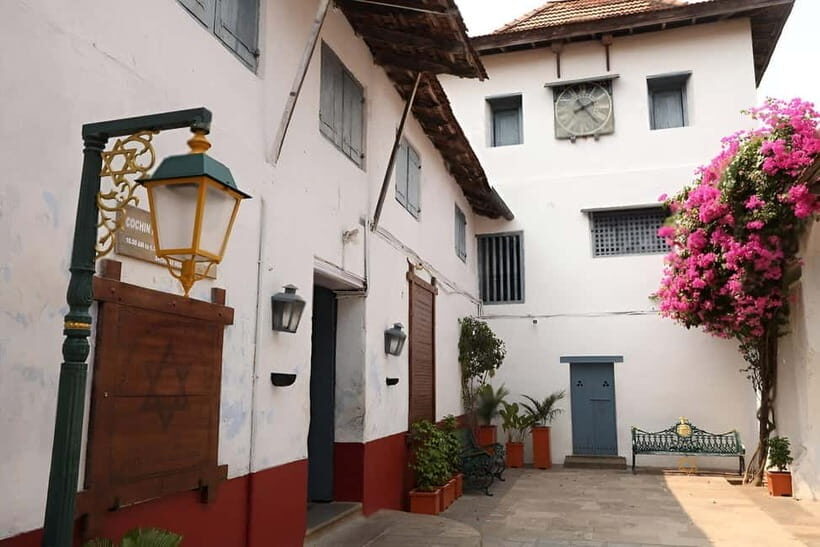
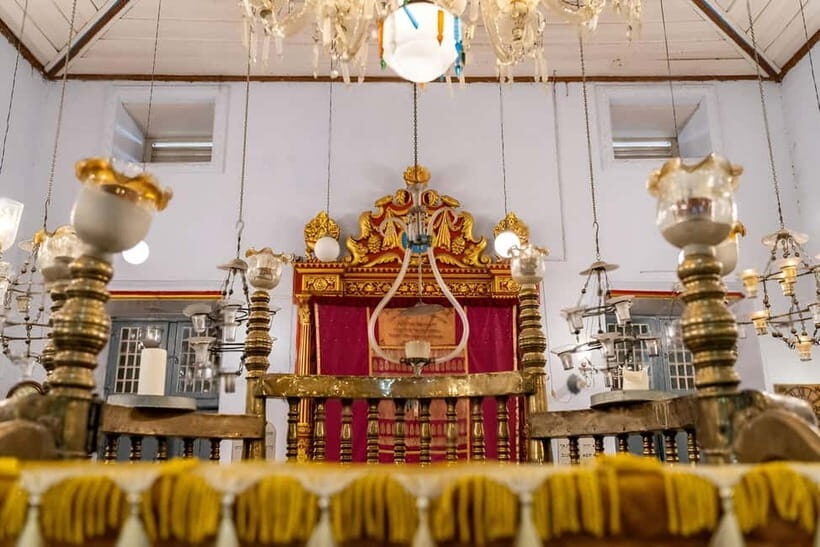
You finish at Paradesi Synagogue, one of the oldest active synagogues in India. This is the big visual payoff of the route.
Inside, you’ll notice details like Belgian glass chandeliers and ancient scrolls, and you’ll hear its history stretching back centuries. The synagogue is also a practical introduction to how ritual objects and architecture support worship and identity across generations.
I love this ending because it gives you a sense of continuity. You’re not only seeing ruins or abandoned buildings; you’re seeing a site still used today. That changes how the earlier stops land in your mind: St. George Church, spices and trade, palace murals, cemetery grounds, and then this working synagogue—all feel like parts of one city story.
If you care about photography, you’ll likely find opportunities throughout this final stop, but still follow the guide’s cues on where photos are allowed. In places like this, small rules make for a smoother visit.
Price and pace: $12 for a smart use of your time
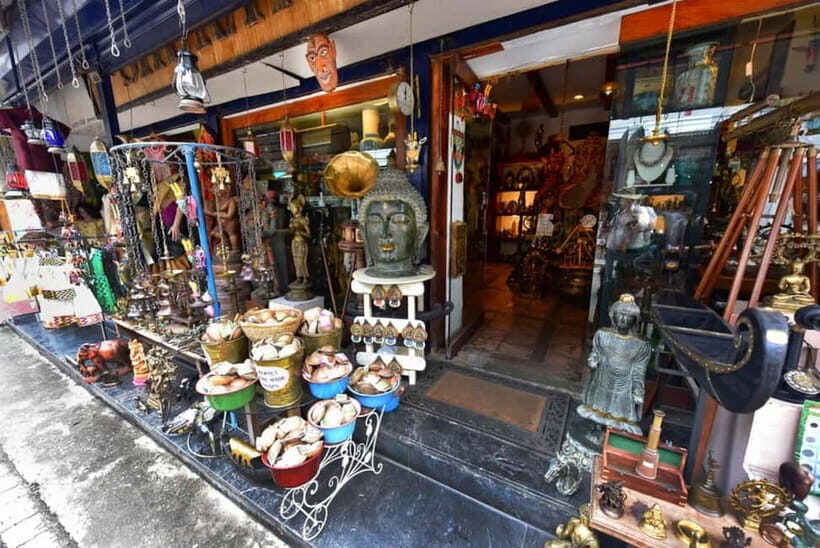
At about $12 per person for a 2.5-hour guided walk, I think the value is strong—especially because this route is tightly built around multiple landmarks that are harder to connect on your own. You’re paying for interpretation: a live guide helping you understand what spices meant, how palace murals fit into Kerala and royal life, and how Jewish sites connect back to the neighborhood.
The group size (up to 10) helps the tour feel manageable. You’re not getting lost in a crowd, and questions actually get answered. If you’re the kind of traveler who wants context without turning every stop into a lecture, this pacing hits the sweet spot.
Is it cheap? Not “budget in every sense,” since you’re paying for guided access and time. But for what you cover in half a day—major heritage sites plus local lanes—I’d call it good value.
Comfort tips that make the tour easier
Here’s what I’d do to make this walk feel effortless rather than exhausting:
- Wear comfortable shoes. Some historic streets can be uneven.
- Carry water and consider a small snack if you tend to get hungry while walking.
- Use sun protection (sunglasses, sun hat, sunscreen). Kochi’s light can be strong.
- Bring some cash, since not everything may be card-friendly in small shops or cafes.
The tour also notes that intoxication and alcohol/drugs aren’t allowed. That’s a good policy for a heritage walk—clear heads make the stories stick.
Who should book this Jew Town heritage walk?
Book it if you want a guided route that connects more than “sights.” This is ideal if you like:
- history you can see in architecture and everyday lanes
- faith landmarks and how they shaped a port city
- markets plus a guide who explains what you’re smelling and looking at
- the chance to meet artists or see art spaces tied to the neighborhood’s memory
It may be less ideal if you:
- need wheelchair access (this walk isn’t suitable for wheelchair users)
- don’t enjoy walking through market and heritage areas
- prefer very long time at one site rather than covering several stops in one afternoon
Should you book this walk?
Yes, I think you should book it if your time in Kochi is limited and you want a guided “connect-the-dots” route. The best part is that the tour doesn’t treat Jewish sites as isolated; it places them alongside Christian tradition, the spice trade, and the palace culture that defined the city’s public spaces.
If you can handle a couple hours of walking with sun exposure, this is a smart way to understand Kochi beyond the postcard list. And if you’re hoping for more than museum-style facts—pay attention during Jew Town and Paradesi Synagogue, where the neighborhood feeling and the active worship create the strongest impression.
FAQ
How long is the Stories of Jew Town guided heritage walk?
The tour lasts about 2.5 hours.
What does the tour cost?
It costs $12 per person.
Where do I meet for the tour?
Meet in front of T D High School in Mattancherry.
What’s included in the tour?
You get an English/Hindi speaking live guide, and guided visits connected to Paradesi Synagogue, Jew Town, and the Jewish Cemetery, plus cultural and historical narratives and photography opportunities.
What languages are the guides?
The guide speaks English and Hindi.
Is the tour a small group?
Yes. The group is limited to 10 participants.
What should I bring with me?
Bring comfortable shoes, sunglasses, a sun hat, sunscreen, water, and cash.
Is the tour wheelchair accessible?
No, it is not suitable for wheelchair users.
Can I get a refund if I cancel?
Yes. You can cancel up to 24 hours in advance for a full refund.