REVIEW · KOCHI
Private Customizable Local Kochi Sightseeing Tour by Tuktuk
Book on Viator →Operated by DREAM TRAVEL KOCHIN TUK-TUK TOUR · Bookable on Viator
Kochi’s best stories roll past on three wheels. This private customizable tuk-tuk route is a smart way to see a lot of Fort Kochi and Mattancherry without wrestling with transport gaps, and it lets you glide through the tighter parts of the city with an open-air feel. You’ll get a local driver who talks through what you’re looking at, from seafront Dutch-era landmarks to active places of worship like the Paradesi Synagogue.
I like that it’s private only your group, so you can actually shape the pace instead of being marched. I also like the built-in convenience: admission tickets are included for the listed stops, which makes planning simpler when you’re counting hours.
One consideration: the schedule is tight, with about 20 minutes per stop, so you’ll want to decide in advance what you truly want time for (especially if you’re the type who likes lingering for photos).
In This Review
- Key points worth knowing before you ride
- A tuktuk route that fits Kochi’s tight streets
- Timing, tickets, and what 4 to 5 hours really means
- Fort Kochi starts: Chinese Fishing Nets and Dutch Cemetery
- Saint Francis Church and Santa Cruz Cathedral: Europe on Kerala time
- Dhoby Khana public laundry: a 1700s rhythm you can still see
- Bastion Bunglow and Mattancherry Palace: Portuguese and Dutch layers
- Paradesi Synagogue to spice market: faith and trade in the same day
- Jain temple and a major Brahmin institution: going beyond the usual church-and-fort loop
- Why the driver-story approach matters (Sulfiker and Shaheer)
- Price at $11: how this can be good value in Kochi
- Small tips to make your tuk-tuk day smoother
- Should you book this Kochi tuk-tuk tour?
- FAQ
- How long is the Private Customizable Local Kochi Sightseeing Tour by Tuktuk?
- Is pickup included?
- Is this a private tour?
- Are admission tickets included?
- How far in advance should I book?
- What is the cancellation policy?
- Is the tour suitable for most travelers?
Key points worth knowing before you ride
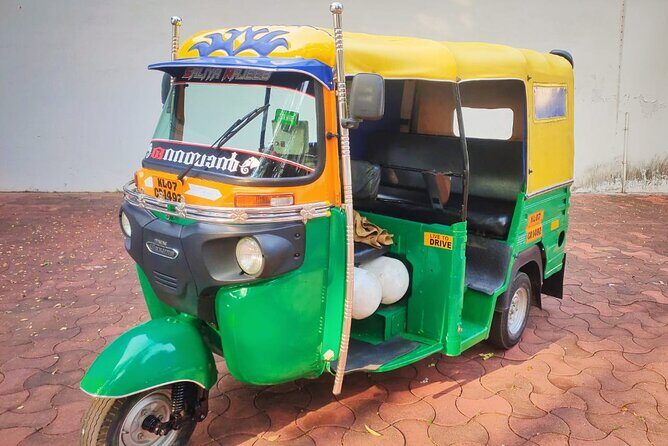
- Private group, flexible pace: it’s your time, not a fixed shuffle with strangers.
- Tickets included for each stop: less ticket-hunting time and fewer surprises.
- Fort Kochi + Mattancherry focus: you’ll see the colonial-era cluster and the adjacent neighborhood of palaces and markets.
- Religious sites in one loop: churches, a synagogue, a Jain temple, and a Hindu temple are all part of the ride.
- Driver-guides like Sulfiker and Shaheer: the best moments often come from the explanations, not just the photos.
A tuktuk route that fits Kochi’s tight streets
Kochi is built for walking and slow discovery, but not every day has the energy for long distances. This tour’s main advantage is that the tuk-tuk handles the city better than a standard drop-off-and-walk plan. You’re not just staring at landmarks from afar—you’re moving between them in a way that matches how Fort Kochi and Mattancherry feel on the ground: short stretches, then quick turns, then a sudden change of scene.
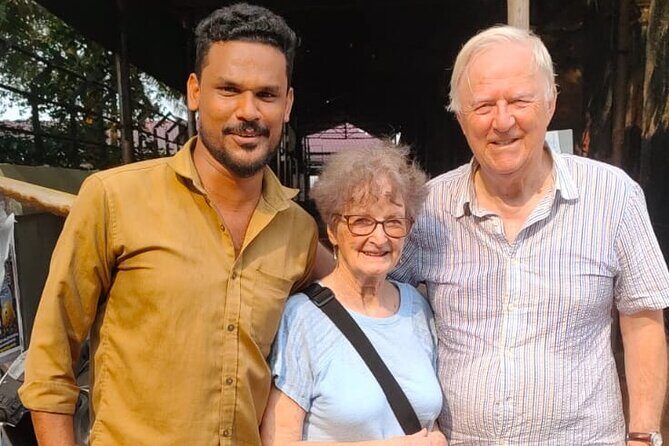
Because it’s private, the route stays comfortable. You can ask questions, pause when something catches your eye, and keep momentum when you want to check another highlight. The driver isn’t just a driver either—names like Sulfiker and Shaheer come up in reviews for good, friendly guiding with history that makes the buildings and rituals easier to understand.
If you like cultural sightseeing that feels practical and local, this style works well. It’s not only about big sights; it’s about how the city layers different eras in the same day.
Other tuk-tuk and auto rickshaw tours we've reviewed in Kochi


Timing, tickets, and what 4 to 5 hours really means

The total duration is about 4 to 5 hours, and the day includes travel time between stops. The remaining time is described as roughly 1 hour and 20 minutes for transportation between attractions, which means you’re not spending all your time parked.
Most stops are around 20 minutes each, and admission is included for those stops. That’s actually a decent rhythm for a private tour: enough time to enter, look around, and get the story, but short enough that you won’t feel stuck waiting for everyone to catch up.
If you have limited time in Kochi, this is a useful structure. If you’re hoping for long, slow museum-style visits, you may want to adjust expectations and treat each stop like a focused highlight rather than a deep study.
Also note the tour runs through a wide window—12:00 AM to 11:30 PM daily during the operating dates shown—so you can usually pick a time that matches your energy level and the rest of your itinerary.
Fort Kochi starts: Chinese Fishing Nets and Dutch Cemetery
Your tour commonly begins with the Chinese Fishing Nets (Cheena vala). These are stationary lift nets—nets fixed as installations—rather than nets that move like typical fishing gear. Even if you’ve seen photos, seeing them in the context of the harbor area gives you a better sense of how Kochi’s waters and trade history shaped everyday life.
Next comes the Dutch Cemetery, a stop that feels quieter but tells an important story. The cemetery is known for its imperial inhabitants—people who left their homelands centuries ago to expand and maintain an empire. In about 20 minutes, you’ll get enough time to understand why the site matters and to appreciate how colonial-era presence still shows up in places you might not expect.
A small practical note: the cemetery stop is usually more about reading and observing than photographing nonstop. If you like symbolism, inscriptions, and the way cities remember people, this is one of the more rewarding early stops.
What to watch for: if you’re sensitive to strong sun or humidity, aim to keep water handy. These early Fort Kochi moments can be bright even when the pace is calm.
Saint Francis Church and Santa Cruz Cathedral: Europe on Kerala time
From the cemetery you move into the Christian landmarks of Fort Kochi, starting with the Church of Saint Francis. This church dates back to 1503, and it’s described as one of the oldest European churches in India. The value here isn’t just the architecture; it’s the idea of how old European contact became physical places you can still visit.
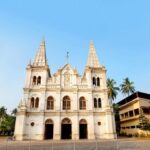
Then you reach the Santa Cruz Cathedral Basilica, described as one of the eight Basilicas in Kerala. It’s also positioned as one of the finer and more impressive churches in India in this itinerary context. In a short time window, you’ll want to look at both the exterior feel and the interior atmosphere—churches like this often reward even a quick visit because the details can be visually dense.
These two church stops work well back-to-back. The first gives you age and origin; the second gives you scale and significance in the region. Together, they show how long-lasting European influence became more than a passing moment.
A consideration: church and religious interiors can limit photography and require a respectful tone. If you’re unsure, follow what other visitors do and keep your pace gentle.
Dhoby Khana public laundry: a 1700s rhythm you can still see

The tour includes Dhoby Khana Public Laundry, said to have been founded in the early 1700s as a central community place for cleaning laundry. This stop is especially interesting if you like cultural scenes that are still in use, not just preserved for tourism.
In the description, you’ll learn that washing clothes happens at an old-style central location, which makes the stop feel like a living snapshot of how daily life used to function—and sometimes still functions. It’s also a nice break from the heavier architecture stops, because you’re shifting from monuments to routine.
Even if the laundry process isn’t the main reason you booked the tour, it often becomes memorable because it shows how Kochi’s history isn’t only written on walls. It’s also in how people manage practical needs—cleaning, water use, and community work.
What to watch for: laundry areas can be visually busy and active. If you’re taking photos, be mindful of people working and avoid blocking entrances or paths.
Other Cochin sightseeing tours we've reviewed in Kochi



Bastion Bunglow and Mattancherry Palace: Portuguese and Dutch layers
Next is Bastion Bunglow, a sea-facing Dutch heritage structure described as built in 1667 and located near Vasco da Gama Square in Fort Kochi. This is one of those stops where the location matters just as much as the building. Being near the sea-facing element helps you understand why forts and coastal structures were so important to the Dutch and other European powers.
Then the route moves to Mattancherry Palace, popularly known as the Dutch Palace though described as Portuguese in origin. The palace features Kerala murals that depict portraits and exhibits of the Rajas. That’s a big reason this stop works: you get a mix of political story and visual art in one place, plus the added regional flavor of Kerala mural tradition.
One of the advantages of covering this pair in the same tour window is that they connect the dots between colonial coastal power and the interior display of status through art. You can see how influence moved—from sea-facing authority structures to palatial cultural messaging.
If you’re short on time in Kochi, this section often feels like the “architecture payoff” of the whole day.
Paradesi Synagogue to spice market: faith and trade in the same day
The tour includes the Paradesi Synagogue, described as the oldest active synagogue in the Commonwealth of Nations and constructed in 1568. In plain terms, this stop is powerful because it’s not only historical. It’s active, meaning you’re looking at a living thread that survived centuries while still functioning within the community.
Then you head to the Cochin Spice Market, described as a down-to-earth shop experience with polished displays and a variety of exotic spices sold in bulk. This isn’t a formal museum stop, so the vibe is different. It’s more hands-on for your senses—smell, color, and how spices are displayed and sold.
A spice market can turn into a sales push if you let it. The better approach is simple: treat it like a learning stop. Ask what’s common locally, what people cook with in Kerala, and which spices are good for tea or everyday cooking (based on what the shop offers).
Jain temple and a major Brahmin institution: going beyond the usual church-and-fort loop
You’ll also visit a Jain Temple, where the itinerary notes a pigeon show and feeding held every day at noon. Even if you don’t catch the exact timing, it’s a memorable detail because it gives you a sense of how Jain worship and community routines show up in daily life.
After that, the tour includes the Cochin Thirumala Devaswom Temple, also called Gosripuram. This stop is described as the biggest and most important socio-religious institution of Gowda Saraswat Brahmins of Kerala. In a short 20-minute visit, you’re not expected to absorb everything, but you can still pick up the main value: this is a real center of community life, not a staged cultural stop.
A consideration for worship sites: dress and behavior matter. You might find it helps to wear clothing that’s easy to manage around entrances and to keep your voice low.
Why the driver-story approach matters (Sulfiker and Shaheer)
What makes this tour feel worth it isn’t only the list of stops. It’s how the explanations land when you’re moving through the city. Reviews highlight guides like Sulfiker, praised for being kind and for sharing history in a way that sticks. Another guide mentioned is Shaheer, who’s described as guiding well and allowing freedom to choose what to see.
That “freedom” piece is important. A private tour can feel like a rigid itinerary if the driver won’t adapt. Here, the structure stays organized while you keep choices. That means if you want more time at the synagogue or you’d rather spend longer walking the palace murals, you’re not locked into one script.
In practice, that’s how you end up with a day that feels like your Kochi, not someone else’s photo checklist.
Price at $11: how this can be good value in Kochi
At $11.00 per person, this tour can be a very strong value—especially because the itinerary indicates admission tickets are included for each listed stop. When admission costs add up, tours can quickly get expensive. Including entry for multiple attractions helps you get more sightseeing per dollar.
You’re also paying for the logistics: pickup is offered, you get a mobile ticket, and the private tuk-tuk format saves time. Even if you’re a confident traveler, Kochi’s older neighborhoods can take time to connect between points. This tour builds those connections into the experience.
Is it expensive if you compare it to doing everything yourself? No, self-guided travel can be cheaper. But if you value having a driver who knows where you should go next and you want to avoid ticket hassles, this price starts to make sense fast.
One more value angle: the tour is scheduled in a 4 to 5 hour window. If you only have half a day, this kind of compact route beats trying to stretch multiple far-apart sights across your entire afternoon.
Small tips to make your tuk-tuk day smoother
A few practical ideas can make the difference between a rushed day and a satisfying one.
- Bring a light layer. Churches and indoor areas can feel cooler than the street, and open-air rides can shift in comfort.
- Wear shoes that handle uneven sidewalks. Fort Kochi and nearby areas often reward careful footing.
- If you care most about photos, decide which two stops are your priority. With about 20 minutes each, it helps to focus.
- For worship spaces, use a respectful tone and follow local cues about where you can stand and when you should move along.
If you go in with that mindset, the tour’s pacing feels like a set of quick chapters instead of a checklist.
Should you book this Kochi tuk-tuk tour?
Book it if you want a private, time-friendly way to see Fort Kochi and Mattancherry highlights in a single half-day, with admission tickets included and a driver who can explain what you’re looking at. It’s a great fit if you like variety: nets and cemeteries, churches and cathedrals, a living laundry scene, a synagogue, a spice market, and temple visits.
Skip or modify your expectations if you want long, slow visits at fewer sites. With about 20 minutes per stop, you’ll get the story and a solid look, but not the hours-long experience some museums or palaces deserve.
If you’re trying to make the most of limited time in Kochi, this is the kind of tour that helps you get your bearings fast and still leave you with real details to think about later.
FAQ
How long is the Private Customizable Local Kochi Sightseeing Tour by Tuktuk?
It’s about 4 to 5 hours. The schedule allows for transportation between attractions, with about 1 hour and 20 minutes for travel time.
Is pickup included?
Yes, pickup is offered as part of the tour.
Is this a private tour?
Yes. It’s a private activity, so only your group participates.
Are admission tickets included?
Admission tickets are included for the listed stops in the itinerary, and you’ll use a mobile ticket.
How far in advance should I book?
On average, it’s booked about 27 days in advance.
What is the cancellation policy?
Free cancellation is available up to 24 hours in advance for a full refund. If you cancel within 24 hours of the start time, the amount paid is not refunded.
Is the tour suitable for most travelers?
The tour notes that most travelers can participate, and it’s also described as near public transportation.