REVIEW · KOCHI
Fort Kochi Local Sightseeing Tour
Book on Viator →Operated by Forte Kochi Tuk-Tuk Tour · Bookable on Viator
Fort Kochi clicks into focus fast. In 4 to 5 hours, you’ll ride a tuk-tuk through the old heart of Kochi, from Chinese fishing nets to Paradesi Synagogue, with stops picked for variety rather than checklists. It’s the kind of route that helps you understand why this coast looks different from other parts of Kerala.
I really like the pickup-friendly style (even when the usual spot isn’t ideal), plus the human factor: the name Shihab comes up as an accommodating, friendly guide who makes the day smoother. And since admission tickets are included for most stops, you spend less time at counters and more time looking.
One possible drawback: the pace is brisk. Many stops are around 20 minutes, so if you want to linger at one place for photos or slow reading, you might feel a little rushed.
In This Review
- Key highlights you’ll actually notice
- How the Fort Kochi tuk-tuk route makes sense
- Stop 1: Chinese Fishing Nets (Cheena vala) as a living landmark
- Stop 2: Fort Kochi Beach for a sea-breeze reset
- Stop 3: Dutch Cemetery for the stories behind the names
- Stop 4: Church of Saint Francis, built 1503
- Stop 5: Santa Cruz Cathedral Basilica for bigger scale
- Stop 6: Dhoby Khana Public Laundry for everyday life
- Stop 7: Mattancherry Palace (Dutch Palace) and its Kerala murals
- Stop 8: Jew Street to Paradesi Synagogue
- Stop 9: Cochin Spice Market for the smells, the stalls, and bulk spices
- Stop 10: Jain Temple and the noon pigeon-feeding moment
- Stop 11: Cochin Thirumala Devaswom Temple (Gosripuram)
- The pace: how 4–5 hours feels in real life
- Value check: is $12 a good deal for this route?
- Who this tour suits best
- Should you book this Fort Kochi tour?
- FAQ
- How long is the Fort Kochi Local Sightseeing Tour?
- What is the price per person?
- Do you get pickup?
- Is this tour private?
- Do I need to bring paper tickets?
- Which major sights are included?
- Are admission tickets included?
- What time does the tour run?
- Where does the tour end?
- What is the cancellation policy?
Key highlights you’ll actually notice
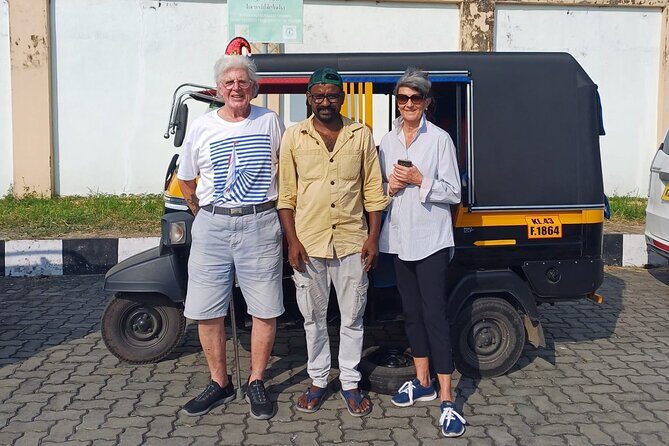
- Tuk-tuk sightseeing that links Fort Kochi to Mattancherry without you fighting traffic on your own
- Chinese fishing nets (Cheena vala): a stationary lift net you can see working style, not just in a photo
- European landmarks in sequence: Church of St. Francis plus Santa Cruz Cathedral Basilica
- Jew Street + Paradesi Synagogue for one of the most distinctive religious stories in Kochi
- Mattancherry Palace under ASI with Kerala mural art connected to royal life
- Food-and-culture stops like Dhoby Khana laundry and Cochin Spice Market along the route
How the Fort Kochi tuk-tuk route makes sense

Fort Kochi is easy to admire and hard to plan. Streets are narrow, traffic can be messy, and many landmarks sit close enough that you can walk a bit—until you realize walking turns into heat and time loss. This tour solves that with a tuk-tuk circuit that strings together the big sights you’ll want to see in one go.
Because it’s a private tour (just your group), you’re not stuck with mismatched interests. One person wants photos of churches; another wants to understand the nets and the old trading-world connections. You can keep the vibe balanced. And with pickup offered and a mobile ticket, the day stays simple.
The best part is the mix of cultures in a single afternoon. You’re not just seeing buildings. You’re moving through the layers left by different communities—fishing traditions, European churches, Jewish heritage, royal murals, temple customs, and the everyday working spaces like public laundry and spice stalls.
Other Fort Kochi tours we've reviewed in Kochi
Stop 1: Chinese Fishing Nets (Cheena vala) as a living landmark
You start with Chinese fishing nets, locally known as Cheena vala. These aren’t the kind of floating nets you might imagine from a “Chinese nets” label. They’re stationary lift nets—fixed installations on land that work as a system.
Why this stop matters: it’s one of the easiest places to spot how the coast was shaped by trade and technique. You’ll see the structure and how it’s positioned toward the sea, and it gives you a grounding before the European and community landmarks come into view.
The time is short (about 20 minutes), so I treat this as a quick orientation stop. If you want extra photos, arrive with an easy game plan: one wide shot showing the net structure, then a couple tighter shots from safer viewpoints.
Stop 2: Fort Kochi Beach for a sea-breeze reset
Next comes Fort Kochi Beach, along the Arabian Sea. This break is small but useful. You get sea air, you can spread out a bit, and you’ll likely notice how the coast sets the mood for the rest of the day.
In about 20 minutes, I’d think of it as a reset, not a beach day. If you’re hoping for a long sunset linger, you’ll need separate time beyond the tour schedule. But as a pause between heritage stops, it does its job.
Practical tip: even if you’re only there briefly, bring a little water awareness. Kochi sun can make short stops feel longer than they are.
Stop 3: Dutch Cemetery for the stories behind the names
The Dutch Cemetery is one of the quiet stops where the atmosphere does some of the explaining. It’s known for imperial-era residents—people who left their homelands centuries ago as part of an expanding empire.
Why I like including it: it changes the tone from “sightseeing” to “context.” After churches and palace-like buildings, you start to understand the human side of colonization and settlement. The cemetery also gives you a chance to look slowly, even if your clock is moving.
Admission here is listed as free, so you don’t lose value for spending a moment in a more reflective space.
Stop 4: Church of Saint Francis, built 1503
Then you’re at the Church of Saint Francis (St. Francis Church). It was originally built in 1503, and it’s often described as one of the oldest European churches in India. It’s famous not just for age, but because it’s seen as a witness to the colonial period that followed.
This stop is a good chance to look at details you’d normally skip—entry points, architectural edges, and how European church design was adapted to the local setting. It’s also a helpful bridge between the Dutch connection and the later basilica stop.
Time-wise, think quick but attentive. With 20 minutes, you’ll want to pick one or two “must-see” angles rather than trying to take it all in at once.
Other Cochin sightseeing tours we've reviewed in Kochi

Stop 5: Santa Cruz Cathedral Basilica for bigger scale
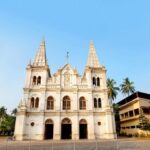
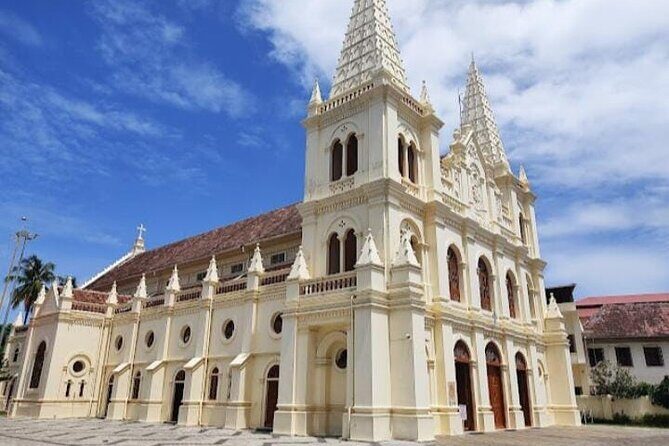
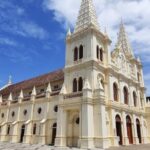
Next is the Santa Cruz Cathedral Basilica at Fort Kochi. It’s counted among the eight basilicas in Kerala, and it’s described as one of the finest and most impressive churches in India.
This is where the tour gives you contrast. If St. Francis Church feels older and more intimate in a “foundation-era” way, the Santa Cruz stop often feels more expansive in presence and architecture.
You’ll likely appreciate it more if you treat it like a stop for structure: look at how the building’s massing and facade work. Even a short visit can teach you something about how these churches functioned as community anchors.
Stop 6: Dhoby Khana Public Laundry for everyday life
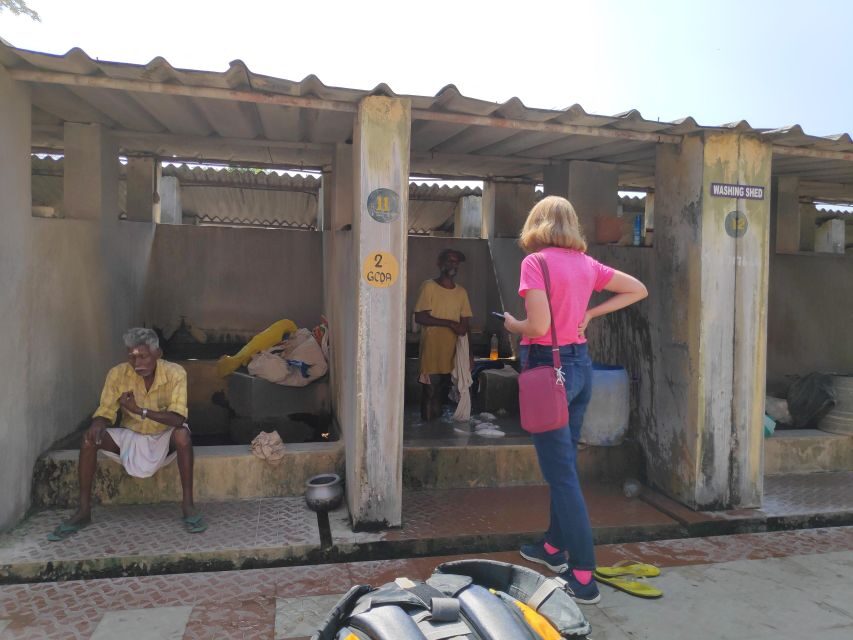
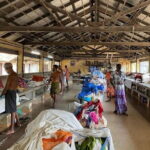
After religious landmarks, you head to Dhoby Khana Public Laundry. This communal laundry facility was founded in the early 1700s, and it was created as a central place for the community to clean clothes.
Why it’s more than a quirky stop: it’s local life with a long timeline. You see how residents solved a practical need—collecting, washing, and keeping garments clean—using a shared system rather than private ones.
The tour’s timing keeps it efficient (about 20 minutes). Use that time to watch the workflow if it’s active and to notice how old facilities still shape daily routines.
Stop 7: Mattancherry Palace (Dutch Palace) and its Kerala murals
Now you shift into palace-land at Mattancherry Palace, popularly known as the Dutch Palace. It’s a Portuguese palace by origin, but the name stuck, and the building is associated with Kerala murals—including portraits and exhibits connected with the Rajas (royal figures).
What makes this stop valuable for most people: you get art and royal storytelling in one place, not just architecture. Murals can be easier to connect to than text, and this one is tied to Kerala’s visual language and court culture.
Again, the visit is around 20 minutes. If you’re a big art fan, focus your attention on one area of murals instead of trying to cover every wall.
Stop 8: Jew Street to Paradesi Synagogue
Walking through Jew Street leads you toward the Paradesi Synagogue. This synagogue is noted as the oldest active synagogue in the Commonwealth of Nations, built in 1568. It’s also described as one of seven synagogues of the Malabar Yehudan.
Why this stop hits differently: it adds another layer to Kochi’s story beyond the European narrative. Here, you get a living religious site—still active—so the architecture isn’t just a museum piece.
If you enjoy heritage details, this is a good moment to slow down. Even with a short scheduled visit, your best move is to look at what you can understand quickly: the entrance, the interior features you can spot right away, and any interpretive notes provided on-site.
Stop 9: Cochin Spice Market for the smells, the stalls, and bulk spices
Next you’re at Cochin Spice Market, described as a down-to-earth shop with polished displays where spices are sold in bulk.
This stop works for different types of travelers. If you like cooking, you’ll appreciate the variety and the chance to see spices in volume. If you don’t cook, it’s still a useful culture contact point. Spices are part of why Kochi matters historically, and the market makes that tangible.
A quick caution: spice shops can turn into quick impulse buys. If you want value, decide before you arrive what you’re buying—one or two spices you’ll use often—rather than trying to collect everything in sight.
Stop 10: Jain Temple and the noon pigeon-feeding moment
At the Jain Temple, you’ll find something unusual: it’s known for a pigeon show and feeding, held every day at noon.
Even if your timing doesn’t line up with noon perfectly, the temple stop is still valuable for understanding local religious routines and the way festivals or daily activities can be built into the space.
If your tour timing does land near noon, this becomes the highlight people remember. If it doesn’t, you can still treat it as a cultural pause: look at how worship and daily life intersect.
Stop 11: Cochin Thirumala Devaswom Temple (Gosripuram)
The day ends at Cochin Thirumala Devaswom Temple, also called Gosripuram. It’s described as the biggest and most important socio-religious institution of Gowda Saraswat Brahmins of Kerala. The temple is situated at Cherlai, in the heart of Matta… (the description cuts off there, but it’s clearly pointing to a specific local area).
This stop is a useful finale because it shifts you from “heritage tourism mode” into “community tourism mode.” Temples are where you see living tradition, not just preserved landmarks.
You’ll want to be mindful of temple etiquette—quiet voice, respectful dress, and following any guidance from staff—especially since your time here is also around 20 minutes.
The pace: how 4–5 hours feels in real life
The tour runs about 4 to 5 hours, with roughly 20 minutes per stop. That pacing is great if your goal is breadth—seeing the major Fort Kochi and Mattancherry highlights without turning the day into a long, exhausting trek.
But it also means you don’t get deep reading time. I recommend choosing your priority before you start:
- If you love churches and architecture, spend extra attention at St. Francis and Santa Cruz.
- If you’re curious about community stories, put extra focus on Paradesi Synagogue and the Dutch Cemetery.
- If you want “Kerala life” flavor, Dhoby Khana and the spice market are your anchors.
Also note the tour ends back where it starts. So you don’t need to worry about planning a separate pickup after temples and shops.
Value check: is $12 a good deal for this route?
At $12 per person, this tour is priced like a local-friendly add-on rather than a premium private experience. The big reason it can feel like good value is the combination of:
- A tuk-tuk route that covers several distant stops
- Pickup offered
- A lot of stops with admission tickets included (with Dutch Cemetery specifically listed as free)
In other words, you’re not just paying for transportation. You’re paying for the convenience of access and the time saved from managing tickets and logistics on your own.
If you’re traveling in a group and you care about hitting key Fort Kochi landmarks efficiently, the value gets better. If you’re the type who hates short stops and wants to stay in one place for hours, you might prefer a slower walking tour (but then you’d pay more in time, not just money).
Who this tour suits best
This is a strong fit for you if:
- You want a one-afternoon overview of Fort Kochi and nearby Mattancherry
- You like variety: nets, beaches, churches, synagogues, markets, laundry, and temples
- You prefer a guide who can keep your day moving without making it feel like a race
It’s also a good choice if you’re not confident planning routes in Kochi traffic. The tour’s private setup helps it stay flexible for your group, even with set stops.
Should you book this Fort Kochi tour?
I’d book it if you want a practical introduction to Fort Kochi that connects the coast, the churches, the synagogue, and the marketplace in one clear loop. The price makes it easy to justify, and the mix of sights gives you a Kochi picture that you won’t get from just walking around one neighborhood.
If you hate time limits, want very slow museum-style visits, or plan to spend lots of time shopping, consider shortening expectations or pairing this with a separate half-day in your favorite area. The schedule is designed to show many doors; it’s not designed to make one door your whole day.
If your top priorities are Chinese fishing nets, Portuguese/Dutch-era church landmarks, and the Paradesi Synagogue + Jew Street layer of Kochi, this is the kind of route that will click.
FAQ
How long is the Fort Kochi Local Sightseeing Tour?
The tour lasts about 4 to 5 hours.
What is the price per person?
It costs $12.00 per person.
Do you get pickup?
Pickup is offered.
Is this tour private?
Yes. It’s a private tour/activity, and only your group participates.
Do I need to bring paper tickets?
No. You’ll use a mobile ticket.
Which major sights are included?
The tour includes Chinese Fishing Nets, Fort Kochi Beach, Dutch Cemetery, Church of Saint Francis, Santa Cruz Cathedral Basilica, Dhoby Khana Public Laundry, Mattancherry Palace, Paradesi Synagogue, Cochin Spice Market, Jain Temple, and Cochin Thirumala Devaswom Temple.
Are admission tickets included?
Admission tickets are included for many stops listed in the schedule, and Dutch Cemetery is free.
What time does the tour run?
The opening hours shown are Monday to Sunday from 12:00 AM to 11:30 PM.
Where does the tour end?
It ends back at the meeting point.
What is the cancellation policy?
Free cancellation is available up to 24 hours in advance for a full refund. If you cancel less than 24 hours before the start time, there is no refund.