REVIEW · KOCHI
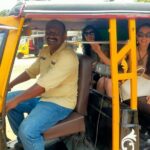
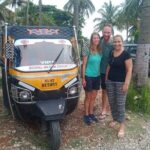
Funny and helpful Tuk Tuk Tour in Kochin
Book on Viator →Operated by Friendly Tuk Tuk Tour · Bookable on Viator
Forget buses; hop in a tuk-tuk. This private Kochi ride is a fast way to get your bearings in Fort Kochi, with a driver who talks like a local and builds a route around your interests. I love how it mixes big landmarks with everyday scenes, from the Chinese Fishing Nets to public laundry life.
What really works is the private transportation for a small group, so you’re not squeezed in with strangers while the driver shares the stories that make these streets click. I also like the flexibility: you can steer toward history, churches, temples, or food-adjacent stops depending on your mood and time.
One drawback to keep in mind: the route can brush past shopping stops, so you’ll want to set a clear boundary if you’d rather focus on sights only. Also, even though some stops show admission included, the tour notes that charges to visit places may still apply for parts of the day—so bring a card or some cash just in case.
In This Review
- Quick hits for this Funny and Helpful Tuk Tuk Tour
- Why Fort Kochi feels easier from a tuk-tuk
- The real value: private time with a driver who talks
- Itinerary walkthrough: what each stop gives you (and what to watch for)
- 1) Chinese Fishing Nets: a 14th-century trade link
- 2) Fort Kochi Beach: quick reset by the Arabian Sea
- 3) Church of Saint Francis: Portuguese-Gothic plus Vasco da Gama’s tomb
- 4) Dutch Cemetery: quiet graves with real colonial weight
- 5) Dhoby Khana public laundry: old-school work happening now
- 6) Santa Cruz Cathedral Basilica: woodwork, altars, and stained glass
- 7) Indo-Portuguese Museum: why the Portuguese mattered here
- 8) Mattancherry Palace: Dutch, Portuguese, and Kerala in one set of walls
- 9) Paradesi Synagogue: old Jewish heritage with striking details
- 10) Cochin Thirumala Devaswom Temple: Kerala carvings and Krishna devotion
- 11) Jain Temple: quiet carvings and devotion
- 12) Jew Town: small streets, heritage feel, and local shops
- 13) Cochin Spice Market: scent, color, and trade history
- Customizing the route so you get your kind of Kochi
- Price and value for a small private group
- The biggest practical tip: set boundaries on shopping stops
- Timing: how to plan your day with a 3–4 hour loop
- Who should book this tuk-tuk tour
- Should you book the Friendly Tuk Tuk Tour?
- FAQ
- How long is the tuk-tuk tour?
- What’s the price and who can join?
- Do they pick me up?
- Is it private transportation?
- Are admission fees included?
- Can the route be customized?
- Do I need a ticket on my phone?
- What’s the cancellation policy?
Quick hits for this Funny and Helpful Tuk Tuk Tour
- Private tuk-tuk, small group pace: you move through Fort Kochi without the usual crowds and delays.
- Local driver storytelling: guides like Aaru, Haris, Nishad, and Shoaib are specifically praised for friendly English and good explanations.
- It actually covers multiple worlds: Portuguese churches, Dutch traces, Jewish heritage, Hindu temples, and Jain carvings in one loop.
- Stop times are short but practical: plan on about 10–20 minutes per main stop, with time to hop back in and keep going.
- You can tailor the vibe: if you want cultural methods (like food prep), ask your driver to shape a side stop.
- Watch the “extra shop” temptation: be direct that you’re skipping any commission-style stops.
Why Fort Kochi feels easier from a tuk-tuk
Fort Kochi is walkable in spots, but it also has enough short streets and quick turns that a tuk-tuk saves energy and keeps the day moving. In just 3 to 4 hours, you get a curated sampler of the area without feeling like you’re racing between far-apart points.
The big advantage is that your driver isn’t just driving. In the best versions of this tour, the driver becomes your moving guide, pointing out what to notice and what to ignore. People specifically mention drivers like Shoaib and Nishad for being prompt, helpful, and safety-minded, which matters when you’re navigating busy lanes at a tourist pace.
Other tuk-tuk and auto rickshaw tours we've reviewed in Kochi


The real value: private time with a driver who talks
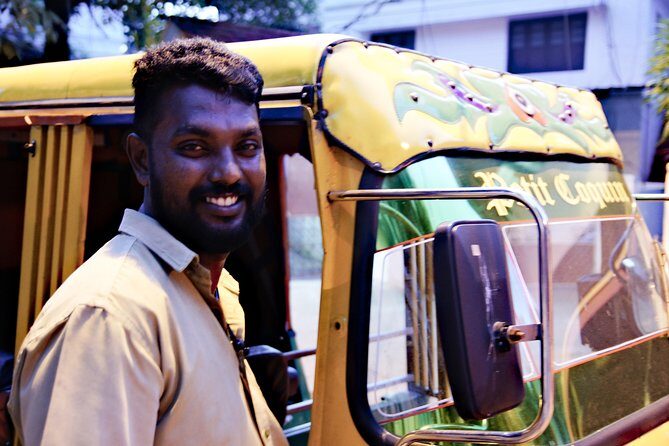
A highlight of this tour is the way the ride turns into context. When Haris explains the “why” behind places—like how Portuguese influence shows up in church design—you’ll get more from the stops than you would from a quick guidebook glance.
I like that you’re not locked into a single script either. If you care about traditional craft, old architecture, or local daily life, you can tell the driver what to emphasize. Aaru is praised for listening and adjusting the tour around interests such as traditional methods and cultural arts, and for adding fun, human touches to the commentary.
And because it’s a private setup, you can actually ask questions without feeling rushed. You’ll get better answers if you go in with a few preferences ready, like current art versus old churches, or temples versus markets.
Itinerary walkthrough: what each stop gives you (and what to watch for)
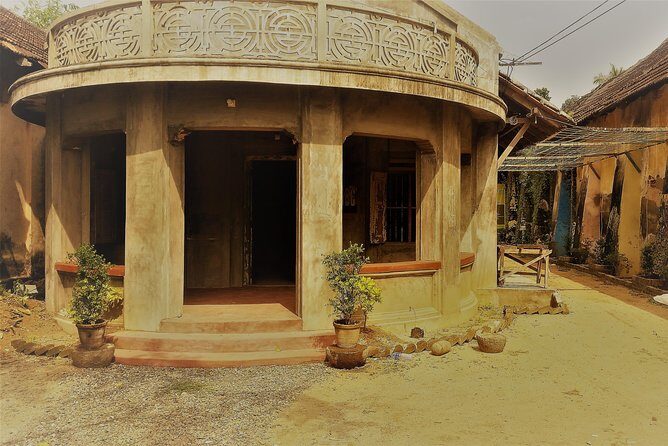
This tour is designed like a loop through Fort Kochi and nearby Mattancherry areas. You’ll spend roughly 10–20 minutes at most stops, then re-board and roll to the next point.
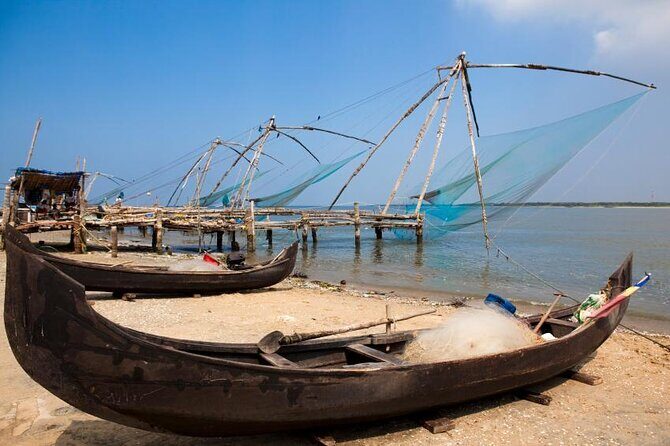
1) Chinese Fishing Nets: a 14th-century trade link
The Chinese Fishing Nets are dramatic even when you don’t know the backstory. The nets are tied to the 14th-century Chinese trade connection, and the scale makes them worth a quick stop even if you’ve seen other fishing setups elsewhere.
Practical tip: arrive ready to look up and around. It’s easy to miss the big visual effect if you only glance at ground level.
2) Fort Kochi Beach: quick reset by the Arabian Sea
A short beach break is useful here because it gives your legs a rest and gives your brain a breather between heavy-history stops. You get sea views and a calmer rhythm before you head back into churches and cemeteries.
This is a good stop if the day feels hot or you want a moment to just breathe. If you’re after long beach time, keep expectations modest since the visit is brief.

3) Church of Saint Francis: Portuguese-Gothic plus Vasco da Gama’s tomb
The Church of Saint Francis is one of the oldest European-style Christian structures in India, and it shows Portuguese and Gothic influences. The standout detail is the tomb area connected with Vasco da Gama, which gives the visit a serious “how history moved” feeling.
When you go, slow down for a minute and watch how the design blends styles. It’s the kind of place where the architecture is the story.
4) Dutch Cemetery: quiet graves with real colonial weight
The Dutch Cemetery is not a loud stop. That’s exactly why it works: it’s peaceful, and the carved gravestones give you a direct visual link to the 17th and 18th centuries.
I like cemeteries like this because they’re honest history—less performative than many attractions, more about names, materials, and memory.
5) Dhoby Khana public laundry: old-school work happening now
Dhoby Khana is where the tour shifts from landmark history to everyday life. You’ll see dhobis (washermen) scrubbing clothes by hand, which makes the centuries-old function feel immediate.
It’s a great contrast stop after churches and cemeteries. If you’re curious about how people lived and still live in the city, this is the kind of place that makes your photos look different.
6) Santa Cruz Cathedral Basilica: woodwork, altars, and stained glass
Santa Cruz Cathedral Basilica is a 16th-century Portuguese-built church that later became a cathedral. The interior details are what you’ll remember: ornate altars, intricate woodwork, and stained-glass windows.
If you’re someone who likes to photograph details, this stop is worth treating a little like a mini-museum. Don’t rush the window colors or you’ll miss the effect.
7) Indo-Portuguese Museum: why the Portuguese mattered here
This museum spot is about the Portuguese-era exchange in Kochi. You’re looking at artifacts and relics that explain how the Portuguese footprint shaped the area’s cultural mix.
Even if you’re not museum-heavy, the museum helps connect the dots between the church stops and what you’ll see later in palaces and synagogues.
8) Mattancherry Palace: Dutch, Portuguese, and Kerala in one set of walls
Mattancherry Palace is built by the Portuguese and gifted to the Kochi Maharaja, and it shows a blend of Dutch, Portuguese, and Kerala architecture. That blend matters because it’s not just “foreign influence”—it’s local adaptation.
Practical tip: if you’re short on time, focus on the architecture transitions and room layout rather than trying to read everything line by line.
9) Paradesi Synagogue: old Jewish heritage with striking details
Paradesi Synagogue is described as one of the oldest synagogues in India. The important visual cues are the intricate tiles, ornate chandeliers, and ancient Torah scrolls.
This is a good stop if you want Kochi to feel like more than one story. You’ll get another thread of the city’s long trading and migration history.
10) Cochin Thirumala Devaswom Temple: Kerala carvings and Krishna devotion
This temple stop shifts the mood again. You’ll see traditional Kerala architecture and intricate wood carvings, plus the serene feel of a place dedicated to Lord Krishna.
If you prefer calm, non-rushed moments, spend a little extra time here within the time limit. Even brief temple visits can feel like a reset.
11) Jain Temple: quiet carvings and devotion
The Jain Temple is another architecture-focused stop with intricate sculptures and carvings. It’s a spiritual pause after the heavier “European influence” stops, and it adds a different texture to your Kochi day.
Practical tip: dress respectfully and keep your pace gentle. Temples respond best to low-key behavior.
12) Jew Town: small streets, heritage feel, and local shops
Jew Town is about wandering. It’s a historic neighborhood shaped by Jewish heritage, with colonial-era style and small shops and landmarks along the way.
Keep your “photo eyes” open here. The charm comes from side streets and storefront details, not just one big monument.
13) Cochin Spice Market: scent, color, and trade history
The Spice Market is for your senses: you’ll step into an atmosphere shaped by centuries of trading traditions. The key is how it feels—colors, spices, and the energy of people buying and selling.
Short stop note: the market time is brief, so decide what matters most. If you want spices to take home, have a plan before you start browsing. If you’re just there for the atmosphere, enjoy the smell and keep moving.
Customizing the route so you get your kind of Kochi
Customization is one of the main reasons this tour is worth considering. You’re not forced into a one-size-fits-all checklist. If you care about religious variety, you can emphasize temples and synagogues. If you care about trade and colonial layers, push for the Portuguese and Dutch-era stops.
Here’s the smart way to do it: ask your driver to tailor based on what you want to remember, not just what you want to see. In one praised experience, Aaru added local-life elements like pappadum making from scratch, sambol spice preparation, and even a glimpse of an older wash-room/service. That’s the kind of detail that turns a sightseeing loop into a culture story.
If that sounds like your style, say it up front. You’ll get a better day if you and your driver share the same goal.
Price and value for a small private group
At about $16.74 per group (for up to three passengers), the value comes from three things: private transport, a knowledgeable driver, and multiple major Fort Kochi stops packed into one half-day.
You’re also not paying for one thing in isolation. Many stops are marked with admission tickets included, but the tour also notes that charges to visit places are not included. Translation: assume you might pay something at certain sites, even if several major ones are covered. Bring a card, or at least a little cash, so you’re not caught mid-visit.
For me, this kind of price works best when you travel as a couple or a small group. Once you have two or three people, splitting the cost makes the private tuk-tuk feel like a bargain versus piecing together taxis and walking time.
The biggest practical tip: set boundaries on shopping stops
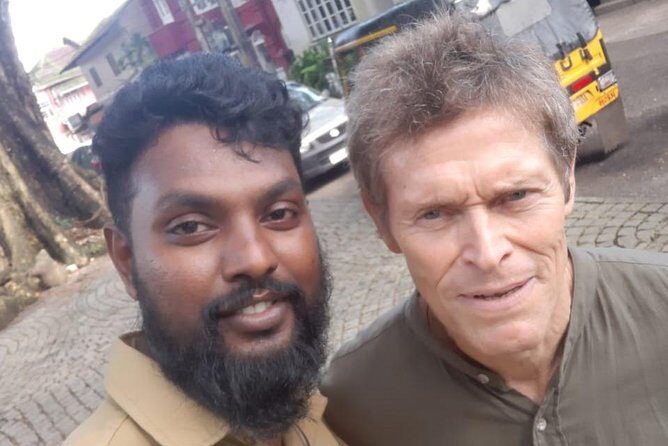
One review calls out unnecessary stops that can feel like sales pitches, including a carpet-shop type detour. That doesn’t mean the tour always does this. But it does mean you should set expectations early.
A simple approach:
- Tell your driver you want sights and local life, not extra shopping.
- If you want market time, ask for short, purposeful browsing.
- If you see a shop detour starting to derail the day, redirect quickly.
A good driver will work with your priorities. The praised guides in this experience are described as friendly and helpful, so it’s reasonable to ask for a clean sightseeing route.
Timing: how to plan your day with a 3–4 hour loop
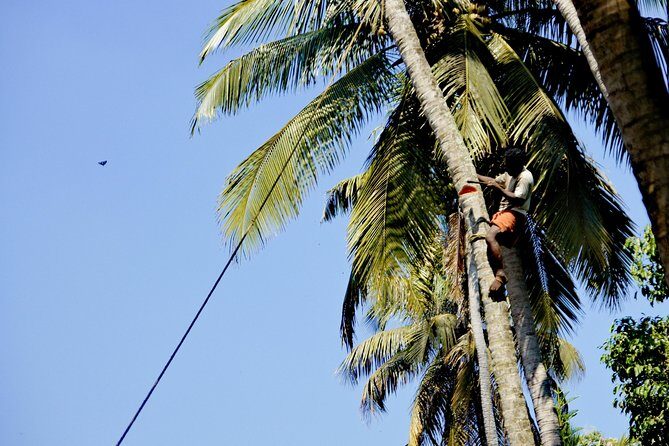
Most stops are around 10–20 minutes, which means you’ll get enough time to look, take photos, and understand the basics without feeling stuck. This is ideal if it’s your first time in Kochi and you want to map the city quickly.
If you’re trying to stack activities later, aim for a relaxed follow-up. You’ll likely want time to browse Jew Town or grab a snack after the tour, because the day ends with streets and markets that invite wandering.
Also: heat and humidity can hit fast in coastal Kerala. The beach break and the shorter stop pacing help, but you’ll enjoy the tour more if you drink water and wear breathable clothes.
Who should book this tuk-tuk tour
This is a strong choice if you:
- Want a first-day orientation to Fort Kochi and Mattancherry.
- Like history but don’t want to do it alone with a map.
- Prefer private transport and conversation over a large group.
- Are interested in Kochi’s mix of Portuguese, Dutch, Jewish, Hindu, and Jain heritage.
It’s less ideal if you hate markets entirely or if you only want one type of place, like temples only or beaches only. The tour is deliberately mixed, which is part of its charm.
Should you book the Friendly Tuk Tuk Tour?
Yes, with one condition: go in with priorities and communicate them early. If you want a smooth Fort Kochi loop with a driver who explains what you’re seeing, this is a great fit, especially at the per-group price point.
I’d book it if you want your day to feel like a guided walk through layers of Kochi—Chinese fishing traditions, Portuguese churches, Dutch traces, synagogues, temples, and the spice atmosphere—without spending hours sorting routes on your own. If you dislike shopping detours, set boundaries at the start and you’ll likely end up with exactly the kind of helpful, fun tuk-tuk day you’re hoping for.
FAQ
How long is the tuk-tuk tour?
The tour runs about 3 to 4 hours.
What’s the price and who can join?
It’s priced per group (up to three passengers, based on the price details) and is private for your group.
Do they pick me up?
Pickup is offered.
Is it private transportation?
Yes. This is a private tour/activity, so only your group participates.
Are admission fees included?
The tour says charges to visit places are not included, but several stops are marked with admission tickets included. Bring some money or a card just in case.
Can the route be customized?
Yes. You can customize the route based on your interests.
Do I need a ticket on my phone?
Yes, you’ll receive a mobile ticket.
What’s the cancellation policy?
You can cancel for a full refund if you cancel at least 24 hours before the experience’s start time.