REVIEW · MUMBAI
Mumbai Shore Excursion
Book on GetYourGuide →Operated by Muziris Heritage - Day Tours · Bookable on GetYourGuide
Mumbai moves fast, and this tour keeps up. I love the Crawford Market scent-of-spices stop and the short local train ride that makes the city feel real, not staged. One thing to consider: the day includes plenty of driving between sights, so it’s worth paying attention to how much time you’ll actually get at each location.
You’ll be in a small group with a private guide (English or Italian), picked up from your Mumbai hotel or the cruise ship terminal. The plan runs about 8:30 AM to 3:00 PM on 12th Nov 2024, ending back at the ship around 3:30 PM, with a very Mumbai mix: working markets, the open-air laundry at Dhobhi Ghat, the lunch-delivery world of the dabawallas, and a temple stop near Girgaum.
In This Review
- Key Highlights You’ll Actually Feel
- A 7-Hour Slice of Mumbai That Starts Like a Morning Habit
- Crawford Market: Fruit, Flowers, Vegetables, and the First Real Smell of India
- CST (Victoria Terminus): Rail Power and a World Heritage Stage
- Dhobhi Ghat at Colaba: Watching Open-Air Laundry Work Up Close
- Dabawallas Visit: The Lunch System Behind Office India
- Taj Mahal Hotel and Gateway of India: Classic Mumbai Landmarks, Good Timing
- Churchgate to Charni Road: The Local Train Ride That Changes Your Perspective
- Girgaum ISKCON Temple: A Calm Pause Before You Head Back
- Price and Value: $110 for a Guided Day in Mumbai
- Who This Tour Fits Best (and Who Might Feel Frustrated)
- Final Call: Should You Book This Mumbai Shore Excursion?
- FAQ
- FAQ
- What time does this Mumbai shore excursion run?
- Where will I be picked up?
- How much does the tour cost?
- How long is the tour?
- What stops are included during the day?
- Is lunch included?
- Are entrance fees included?
- What languages is the guide available in?
- Is cancellation free?
- Is local transportation included for getting around?
Key Highlights You’ll Actually Feel
- Crawford Market: fruit, flowers, vegetables, and that first hit of spice-and-stall energy
- Victoria Terminus (CST): see Mumbai’s rail power up close at a World Heritage Site
- Dhobhi Ghat (Colaba): a photo stop at the open-air laundry scene
- Dabawallas visit: get a closer look at the lunch system that feeds office India
- Local train segment: a short ride from Churchgate to Charni Road with a guide keeping you on track
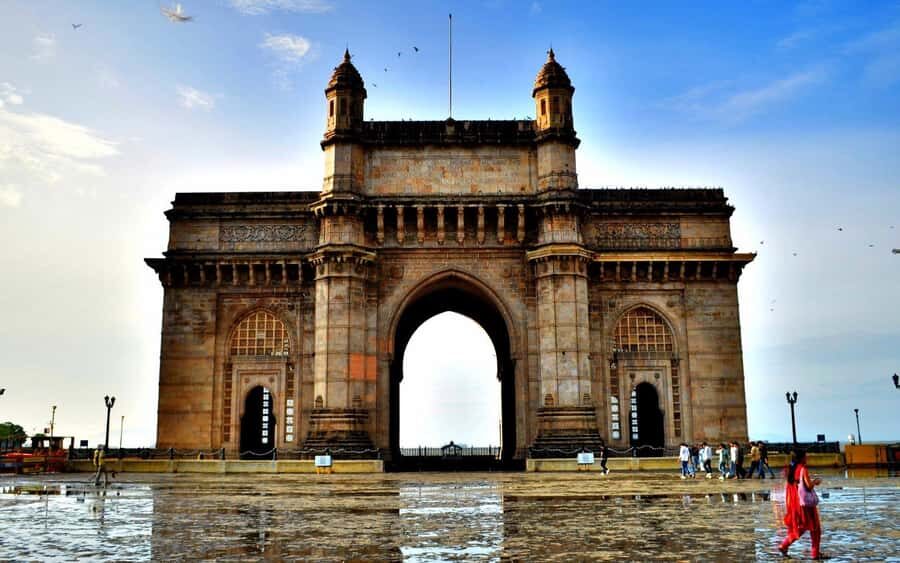
- Taj Mahal Hotel + Gateway of India: classic landmarks with practical, walkable timing
A 7-Hour Slice of Mumbai That Starts Like a Morning Habit
This excursion is built around the idea that Mumbai isn’t a museum city. It’s a working city. So instead of only viewpoint photos, you start in a place where people buy, sell, and move—Crawford Market—then you pivot to rail, laundry, and the midday meal route that keeps so many offices running.
The schedule is also designed for cruise reality. You’re out early (8:30 AM), you cover multiple neighborhoods by car, and you end in time to be back onboard by mid-afternoon. If you like your shore days structured but still flexible enough to look around and take photos, this style fits.
The included chauffeur-driven transportation matters more than you might think. Mumbai traffic can be unpredictable, and having a driver whose job is getting you from point A to point B helps you spend your brainpower on the sights—not on route math.
Crawford Market: Fruit, Flowers, Vegetables, and the First Real Smell of India
Crawford Market is the opening act for a reason. It gives you an immediate sense of how Mumbai feeds itself—literally. You arrive and visit the market, and even if you’re not a shopper, it’s one of the best places to read the city: who’s selling, what’s in season, how stalls are stacked, and how people negotiate prices and quantities in fast, practical ways.
This is the part of the day most likely to deliver that promised “catch the scent of spices” feeling. Even if spices aren’t the only focus (the market is also known for produce and flower stalls), the combination of food goods, spices, and open-air crowd movement tends to make the sensory impact unavoidable. If you want a strong start, you’ll get it here.
Practical tip: go with your camera ready, but also keep some personal-space awareness. Markets are tight. You’ll want room to pause without blocking someone buying or carrying items.
CST (Victoria Terminus): Rail Power and a World Heritage Stage
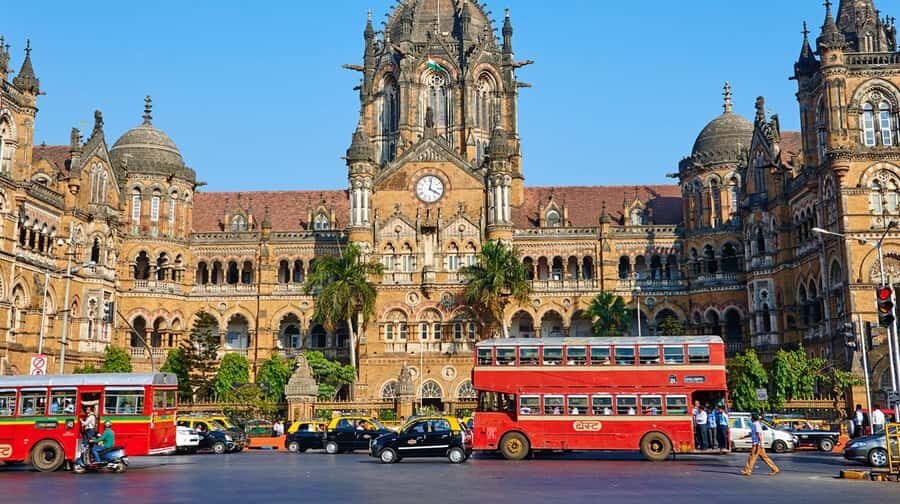
After Crawford Market, the route heads to CST station, officially Victoria Terminus, a World Heritage Site. This stop is less about rushing through a transit hub and more about seeing how the city’s energy channels through rail.
What makes this stop worthwhile is contrast. You’ve just been in a market where everything is close, visual, and immediate. At CST, the feeling changes: architecture, scale, and the sense that millions of commutes hinge on this kind of infrastructure. Even for people who aren’t train nerds, it’s a strong way to understand why Mumbai feels like it’s always in motion.
If you’re short on time, you’ll still want a few minutes to look up and around. Stations like this reward the slow glance.
Dhobhi Ghat at Colaba: Watching Open-Air Laundry Work Up Close
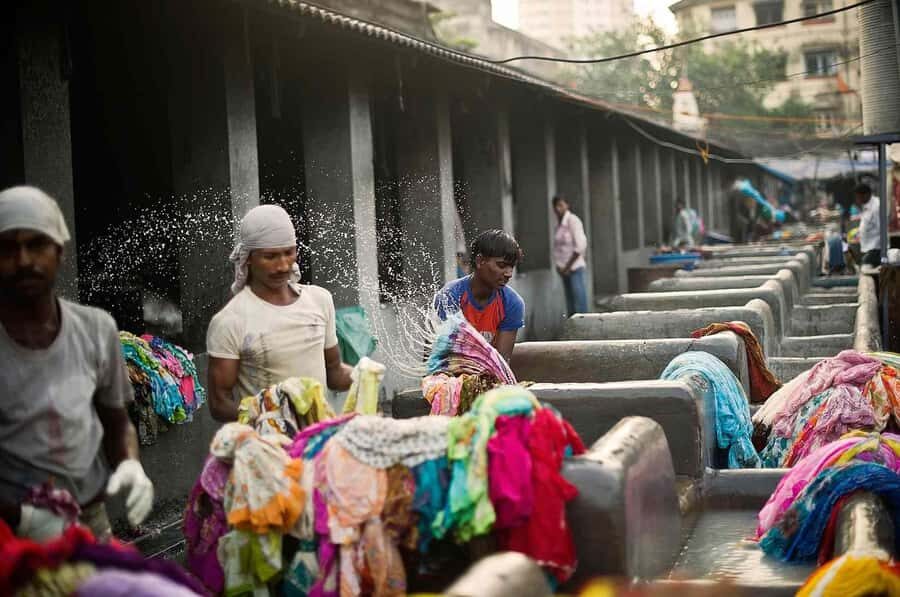
Next is Dhobhi Ghat at Colaba, the open-air laundry area. The schedule includes an arrival, a visit, and a photo stop at the washing place.
This is the kind of stop that can be either a quick look or a lasting memory, depending on how you like to travel. If you enjoy observing everyday labor and seeing how systems work, Dhobhi Ghat is compelling. If you prefer mostly monuments and viewpoints, you might wish it were longer or paired with fewer moves.
Either way, it’s one of the most “Mumbai-specific” moments on the route. The city’s famous skyline is one side of Mumbai; the daily work of washing, drying, and maintaining clothing is the other side—less glamorous but more human.
Photo tip: expect bright light, busy foregrounds, and wet surfaces. Your best shots will come from stepping slightly to the side rather than trying to photograph straight into the busiest area.
Dabawallas Visit: The Lunch System Behind Office India
Then comes a stop that many visitors underestimate until they learn what it represents: the dabawalla world. The day includes an arrival and visit focused on how lunch gets from kitchens to office desks.
Even with no detailed narration in the schedule itself, the value here is obvious: Mumbai runs on details, and the dabawalla system is one of the most famous examples. You’ll likely see how organized this work is, and you’ll connect it to what you’ve already seen earlier in the day—market supply, city rail, and the constant flow of people.
This is also where a strong guide becomes extra important. A good guide can translate what you’re seeing into the logic behind it. In one instance where the guide was praised for being engaging and informative, the day felt smoother and more meaningful because the storytelling made the system click rather than just stand as an interesting stop.
Taj Mahal Hotel and Gateway of India: Classic Mumbai Landmarks, Good Timing
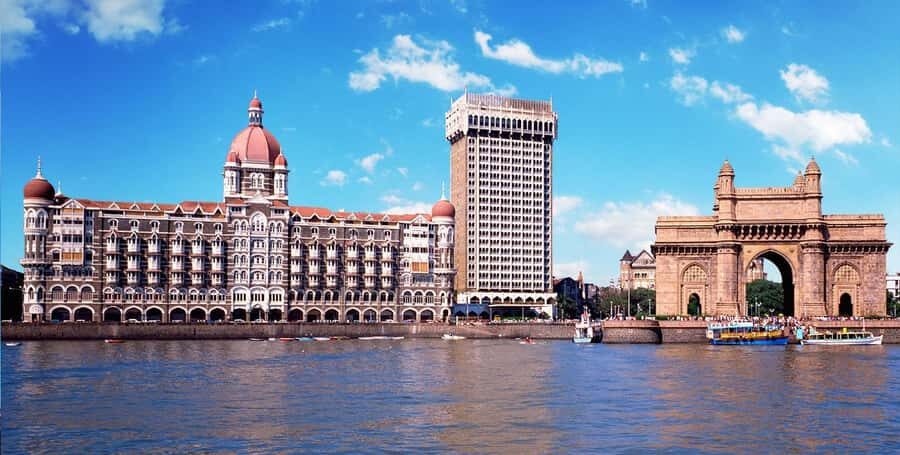
After the dabawalla visit, the route heads to the Hotel Taj Mahal, with an arrival and then a walk to Gateway of India (it’s right opposite the hotel). This portion of the itinerary works well because it’s walkable. You don’t lose time jumping between far-apart stops—you get a short, efficient transfer and then a landmark area where you can browse and photograph.
Gateway of India is one of those places where the photos are easy, but what you’ll remember more is the surrounding street life: people moving through the area, vendors, tour groups, and the way the harbor-adjacent location makes Mumbai feel coastal and global at once.
If you’re thinking about time management for photos, this is a good moment to slow down. It’s not a temple “get in and out” stop. It’s open-air. You can take a breath.
Churchgate to Charni Road: The Local Train Ride That Changes Your Perspective
One of the most practical and satisfying pieces of the day is the included short ride by local train from Churchgate railway station to Charni Road railway station.
This is where the tour earns its keep. Seeing Mumbai from inside a car window is only so helpful. A local train segment—guided and short—lets you feel the city’s rhythm: how people pack in, how movement happens, and how commuting looks when it’s not designed for visitors.
A word on expectations: this isn’t framed as a full transit experience with lots of time. It’s a short ride. But that brevity is a feature on a shore excursion. You get the taste without spending your entire day commuting.
If you’re prone to motion sickness or stress in crowds, bring what you need in advance. The ride is short, but crowds can still feel intense.
Girgaum ISKCON Temple: A Calm Pause Before You Head Back
The last major stop on the city plan is Girgaum ISKCON Temple. You arrive, visit, and then you’re driven back toward the ship, arriving around 3:30 PM.
A temple stop is a nice counterbalance after markets, laundry, and rail. It gives you a different sensory world: quieter pacing, more attention on prayer and architecture, and a chance to reset your senses before the day ends.
If you plan to take photos, watch how people are moving. Often, the best shots come from respecting the flow rather than trying to control it.
Also, keep in mind this is a visit included in the itinerary, meaning your guide will likely manage timing to keep you on schedule.
Price and Value: $110 for a Guided Day in Mumbai

At $110 per person for about 7 hours, you’re paying for three main things:
- A private guide (small group setting)
- Chauffeur-driven transportation
- Entrances, camera fee, and lunch are included
Whether that’s a great deal depends on how you compare it in your head. If you were thinking of doing the day on your own, you’d still face costs for transportation plus paying someone to translate what you’re seeing at multiple stops. Mumbai also isn’t always straightforward for first-timers when it comes to local rail and “what to do next.”
Now the balance point: the day includes multiple transfers by car. In feedback patterns tied to similar guided shore formats, a common complaint is that some days can feel heavy on travel time and light on time with the guide at each location. In other words, even a good itinerary can feel off if the guide timing gets squeezed.
How to protect yourself:
- Ask your guide early how much time you’ll have at Dhobhi Ghat and at the dabawallas visit.
- If you care a lot about the market and want photos, say so at the start—then you’ll know you can focus before the day compresses.
On the rating side, the overall score sits around 3.1 out of 5, which usually signals inconsistency rather than a disaster. For you, that translates to: go in with realistic expectations, and communicate your priorities early.
Who This Tour Fits Best (and Who Might Feel Frustrated)
This excursion is a strong fit if you want:
- A guided day through multiple working Mumbai neighborhoods and systems
- A taste of local life that goes beyond monuments
- A structured route that ends on time for your ship
It may feel less ideal if you:
- Hate driving time and prefer fewer stops
- Want lots of museum-style depth (this is more observational and system-focused)
- Are very time-sensitive and get annoyed when groups move on quickly
Guide quality also plays a role. When guides are on point—one guide named Magan has been praised for punctual pickup and clear storytelling—the whole day feels like it clicks. When language or timing is off, you’ll feel it more in a city this busy.
Final Call: Should You Book This Mumbai Shore Excursion?
If your goal is a 7-hour, guided Mumbai day with real-life stops—market, laundry work, the dabawallas lunch system, classic waterfront landmarks, and a local train taste—I think this is bookable. The included transportation and guide are the difference between scratching the surface and actually understanding what you’re seeing.
If you’re the type who needs lots of time at fewer locations, or you’re extremely sensitive to schedule slip, consider booking with your eyes open and plan to communicate early about what matters most to you (market photos, Dhobhi Ghat photos, and the train ride are usually the anchors).
Either way, Mumbai isn’t slow. This tour at least gives you a plan that moves with the city’s pace.
FAQ
FAQ
What time does this Mumbai shore excursion run?
It runs from 8:30 AM to about 3:00 PM, with return to the ship around 3:30 PM.
Where will I be picked up?
Pickup is included from Mumbai hotels or from the cruise ship terminal.
How much does the tour cost?
The price is $110 per person.
How long is the tour?
The duration is listed as 7 hours.
What stops are included during the day?
The itinerary includes Crawford Market, CST (Victoria Terminus), Dhobhi Ghat in Colaba, a visit to the dabawallas, the Taj Mahal Hotel area with a walk to Gateway of India, a train ride from Churchgate to Charni Road, Girgaum ISKCON Temple, and then return.
Is lunch included?
Yes, lunch is included.
Are entrance fees included?
Yes. All entrance fees are included, along with a camera fee.
What languages is the guide available in?
The live tour guide is listed as English and Italian.
Is cancellation free?
Yes—free cancellation is offered up to 24 hours in advance for a full refund.
Is local transportation included for getting around?
Yes. The tour includes chauffeur-driven transportation, and it also includes a short local train ride from Churchgate to Charni Road.